





The question: How do you choose a film institute?
It’s quite a tough question. And if you really look at it, it’s quite an important one too.
The very first thing a student should understand is: what exactly do we have to check? So let’s start there, and then go one by one.
What should you check first?
Before choosing any institute, I think the very first thing is to understand what kind of environment you’ll get once you go there. Because the company you keep and the environment you’re in change a lot. So I think the surroundings are very important.

The second thing is the facilities you’ll get. In terms of equipment, in terms of computers, in terms of teaching.
The third thing is the teachers, and what their experience is like. You should know about the teachers.
The fourth thing is what work the students there have done. The students who were there before you, what have they done, and what are those students doing right now?
The fifth thing is to look at their latest work, and also at what their very first work was like. Understand that too, so that you can see the improvement. Is this institute still teaching the way things were done earlier, or are the latest things going on here as well?
And the sixth thing. Apart from what they give in the course, what else do they get you to do? How eventful is it? Will there be only filmmaking-related things there, or will there be something extracurricular too?
Because art and filmmaking aren’t only filmmaking. It’s more than that. There are more things you should know, or that you’ll experience. If you’re spending 6 months or a year in one place, that’s your time too, isn’t it? So will you only learn filmmaking there, or will you also get a chance to do a little something extra? Because the learning experience is a very amazing experience in itself.
Now, what are the red flags?
Now let’s talk about the red flags. The things that, once you understand them, tell you “this shouldn’t be there.” When you understand the answers to these questions, you’ll know what to keep in mind, and you’ll know what a red flag is.
The first red flag: their BTS shows only classes
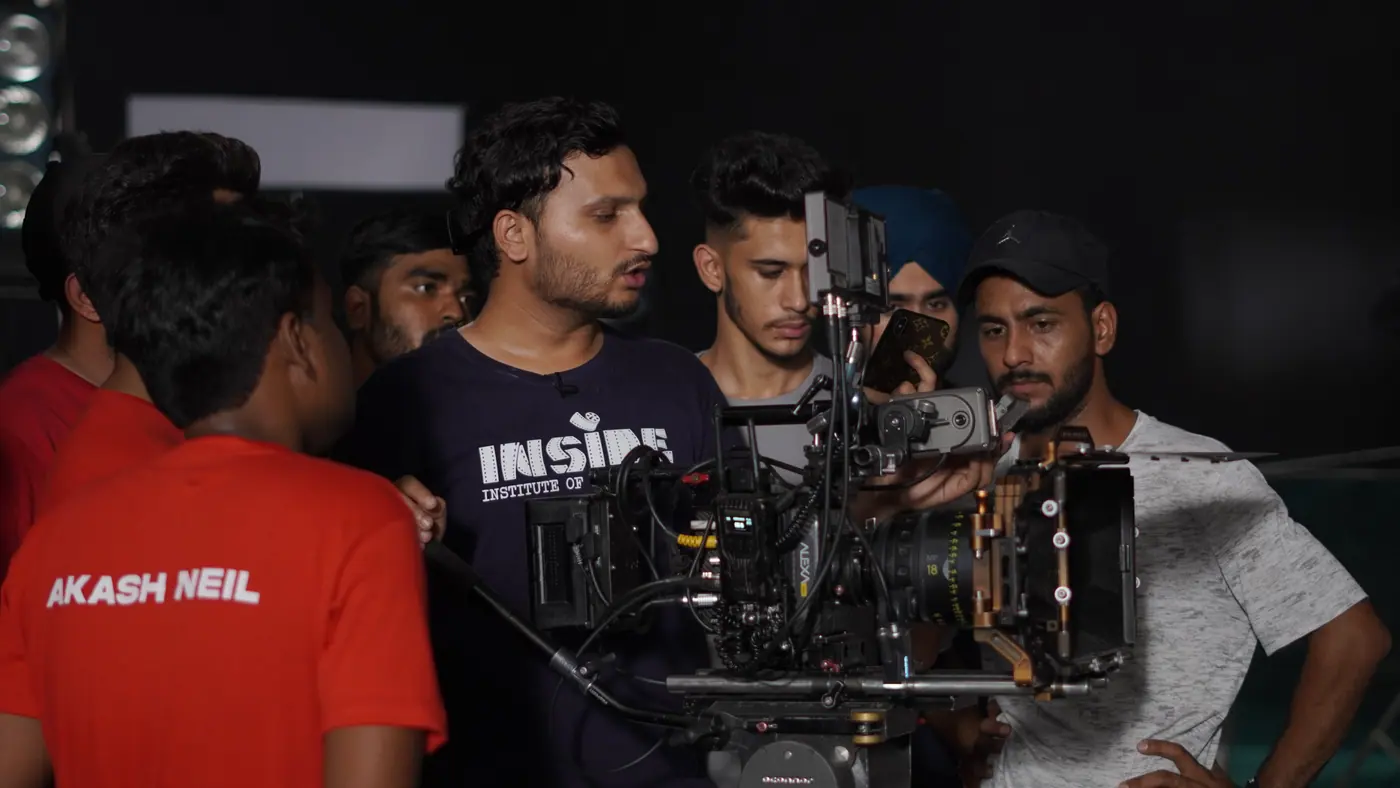
Look at their behind-the-scenes, their BTS, of the work they’ve posted. The very first thing is this: in the BTS you’re seeing, how much of it shows only class, class, class, class, and how much of it shows practical work? You’ll understand a lot from there itself.

The second: AI photos and stock photos
Then, check their website and check their Instagram. On the website and on Instagram, are there AI photos? Are there stock photos? Or are there actual photos of the institute, actual videos of the institute? Is the students’ work there? The students’ behind-the-scenes? Things related to events? It’s important to understand that.
If all of this isn’t there, then that’s the very first sign: don’t choose this institute.
The third: you can’t find out about the faculty and students
Study the faculty. And like I told you, study the students. What are those students doing today? Are they just doing some job after the course, or are they also doing their own freelancing? Or have they reached a good position somewhere? Understand that too.
The fourth: the environment isn’t good
Apart from that, I told you to look at what the environment there is like. So, the existing students. Usually institutes post their students’ work, and usually they tag them too. So find out who the students there are, and ask them: “Brother, how’s the environment? How did you feel? How did you like it?” That way you’ll also understand what kind of environment you’re going into.
If the environment isn’t good, you shouldn’t go there.
The fifth: “We’ll get you a great job, you’ll earn a lot of money”
Now, the major red flags. Number one: if an institute tells you, “Come here, we’ll get you a very good job, there’s a lot of money in this, you’ll earn a lot of money,” then in my view that’s one of the biggest red flags. Because they’re setting up a fake narrative for you, that they’ll make you earn money.
I mean, money is in every job, isn’t it? Whatever job you do, there’s money in it. But if they don’t tell you that they’ll make you skilful, that they’ll get you to do practicals, that they’ll teach you, that they’ll work on your personality, what all they’ll work on, if they don’t tell you all of that, then it doesn’t matter.
The sixth: no resources, no equipment
Then, if you aren’t being given resources and things at an institute, then you shouldn’t even visit that institute. Because if you go there, you’ll only waste your time. You won’t get anything to practise on.
Think about why you’re going to an expensive institute in the first place. It’s because you can’t put ₹10–20 lakh into equipment. You can’t put ₹2–2.5 lakh straight into a computer right now, and along with that buy a camera of ₹2–2.5 lakh. I mean, how would you put in that much money?
So you think: “The ₹1–1.5–2 lakh I’m putting in, or the ₹50,000–60,000 I want to put in, what kind of place should I put it in, where I’ll gain the skill, and where I’ll get all that equipment right there, so that I can work on it and learn?” That is the only reason.
So if that isn’t there, it’s a red flag. You shouldn’t go.
The seventh: “100% placement guarantee”
Apart from that, if an institute is loudly saying “100% placement guarantee, 100% placement guarantee,” then brother, that doesn’t make any sense. Because you’ll find the “100% placement guarantee” people everywhere. That’s the biggest thing they have. Apart from that, they don’t have anything.
The eighth: they push you towards a different or bigger course
Then, suppose they tell you to take a bigger course instead of a small one. They tell you to take an expensive course. They tell you everything is good, good, good. Or they aren’t offering the course you need.
Suppose you want to do animation, but they teach VFX, and they tell you, “No, no, there’s a lot of scope in VFX, there’s nothing in animation.” Then this is a red flag. Because they aren’t understanding you. They aren’t understanding what’s best for your career, what’s best for you. They’re understanding how they’ll benefit.
So always understand this. The best institute is the one that guides you the right way. It tells you what you need, what you should learn, and what will be best for you. It explains the reality. It doesn’t say false things, doesn’t make false promises, and puts its truth in front of you, so that you can go there and genuinely learn.
Because this is a service to society. And the ones who are making it into a machine for earning money, you should stay away from them. Because this is about your career. You’ll spend your time, your energy and your money. Don’t spend it on the wrong things.
And finally: who started this institute?
Then, who made the institute? Who started it? Who is running it now? Who are the people running it? What is their thought process? What is their mindset? Research the founders. Knowing that is very important. Research the owner who is running that institute, and what their thought process is like.

So how do you know if they really teach practically?
Now, how will you find out whether an institute really gets you to work practically or not?
Brother, you’ll find out from the BTS. You’ll find out from their visuals. You’ll find out from the photos and videos that come in front of you. And when you talk to the students, you’ll find out very clearly.
Whatever the institute says, you’ll understand the reality from these things.
How much do teachers matter?
Then let’s understand how much teachers matter. In my view, teachers matter a lot.
Don’t just look at how educated the teacher is, or what they know. That’s basic.
Look at how many practicals this teacher has done together with students. Which projects have they been involved in? How many projects have they done themselves? Is there fire and passion inside them or not?
So that when you go to them, they’ll be able to pass that passion on to you. Will they be able to pass that motivation on to you or not? That’s important too, isn’t it? So definitely look at that.

How much do equipment, the studio and computers matter?
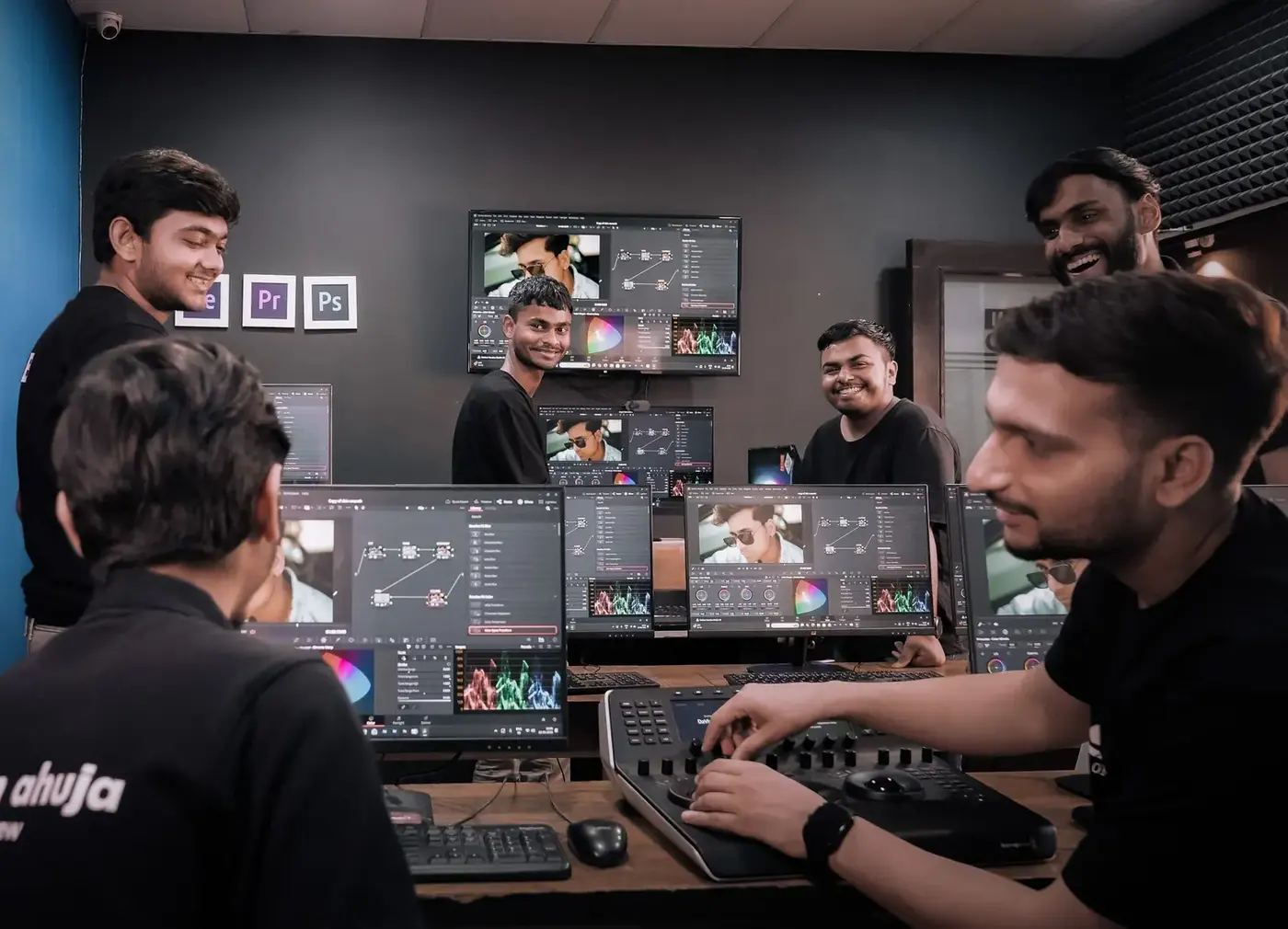
Then equipment, the studio, computers. Like I told you, how much does it matter? Actually, it matters a lot.
Usually everyone has these things. Some have a little equipment, some have a lot. But is it the latest? Is it updated? Is what they have actually being used, or is it just kept there to show? And how much of it do students get?
So ask a student: “Brother, do you get access to the camera? Do you get access to lighting? Can you take it out from here? Do you have access? Can you sit at a PC and work for 4 hours, 5 hours at a time? Is it like that?”
If that’s there, then it’s good.

What should you ask current and past students?
From current and past students, you should understand what the behaviour is like in the institute. What’s the environment like among the other students? What’s the teachers’ behaviour like, and the atmosphere? Is there positivity or not?
How many practicals are you made to do? How much are you made to shoot? How many classes happen? How much equipment do you get? How much are you allowed to work in the institute yourself? What kind of motivation are you getting? And are you getting guidance or not?
You should definitely ask all of these things.
Now, what about fees, location, placement promises and Instagram followers?
Now comes the question of fees, location, placement promises, and Instagram followers, all these things.
Instagram followers
First of all, Instagram followers. However many followers someone has, it doesn’t really matter. That’s the reality. So don’t go by looking at the followers. Although we do have quite a lot, I still want to say this.
Fees
Then comes the fee. Look at the fee according to your budget. Don’t look at it according to the institute.
First, understand whether you can pay it or not. Because, my friend, that’s your hard-earned money. If you can’t do it properly, then there’s no benefit in it.
The second thing. If one institute’s fee is lower and another’s is higher, and the second one gives the same facilities for a little less fee, should you go there? Then do a reality check. Someone’s fee is this much, someone’s fee is that much. So how many facilities is each one giving us? Of the facilities I told you about, who is providing how much?
It’s not about who teaches more software. It’s not about whose name is bigger. It’s not about who has more things, or who has opened institutes in 10 places. No. Are they taking the fee only for the name of the brand, or also for the facilities they’re giving? So how much is it worth? It should be value for money. Whatever money you’re paying, how much benefit will it give you, or what will it do for you? That’s what’s important. Because brother, you’re investing in yourself.
Location
Location, in my view, matters according to you. If you can travel, if you can go far away and study, you should definitely do it. If you can’t travel, then of course you should look at somewhere nearby. So in my view, location depends on your comfort. If you can go, then in my view you should go to the best institute you find, the best film school you find.
Placement promises
I’ve already told you about placement promises. Nothing happens with placement promises. And actually, nothing much happens with placement either. A person only gets you the first placement.
Suppose they got you your first job, and you worked there. And if you couldn’t do well there, because your skill didn’t develop, then you’ll either be removed, or you won’t be able to continue. And then they won’t place you somewhere else again. The guarantee is only for the first time, that’s all.
So keep this in mind too. Who is teaching you the skill, brother, that’s what’s most important.
Some real stories
Now, usually there are a lot of students who come to us from other institutes too. So let me tell you some stories as well.
Their problem is usually the same. “The teacher there wasn’t good.” Or, “There were no teachers at all.” Or, “We didn’t get the facilities.” “We didn’t get the equipment.”
I have a lot of stories like this, where students come here later and then put in more of their own money too. Because they thought that institute was perhaps some big institute, or its fees were higher than ours, or sometimes lower than ours.
So please understand all these things, and try to understand that you must not join the wrong institute.
What if you’re confused between two or three institutes?
Now, if you’re confused between two or three institutes, I’ve given you the clarity.
You can ask for demo classes too. And the best thing, like I told you, is to talk to their teacher or the founder. Talk personally.
And secondly, like I told you, after understanding the institute, always tell your teachers: “Ma’am, we want to meet the founder. We want to meet the owner. We want to talk to them.” And ask them, from your heart, the questions that are in your mind.
And whichever one you feel is living up to all these parameters, check that thing, and then make your final decision according to it.
Remember one thing
You’re investing in yourself. The money you put in, you’ll put into yourself. The time you put in, you’ll put into yourself. The energy you put in, you’ll put into yourself.
Only go there if you’re benefiting, if you’ll get some benefit from it in the future.
Don’t look at whether the institute is small or big, or how big its name is. Don’t look at all those things. Weigh it only according to the points I’ve told you.
- Check the environment first, then the facilities, the teachers and what past students are doing now.
- Red flags: BTS with only classes, AI or stock photos, “100% placement guarantee”, no equipment, pushing a bigger course.
- Ask current students about practicals, equipment access and guidance.
- Look at the fee according to your budget, then compare what you actually get, not the brand name.
- Take a demo class and meet the founder before you decide.
Frequently asked questions
What is the first thing to check before choosing a film institute?
The environment you’ll get there. The company you keep and the environment you’re in change a lot. Then the facilities, the teachers, and what the past students have done.
What are the biggest red flags in a film institute?
“We’ll get you a great job, you’ll earn a lot of money,” a “100% placement guarantee,” no equipment or resources for students, AI or stock photos instead of real ones, BTS that shows only classes, and being pushed towards a bigger or different course than the one you need.
How can I tell if a film institute really teaches practically?
From their BTS, their visuals, the photos and videos they post, and by talking to their students. Whatever the institute says, these things show you the reality.
Do Instagram followers matter when choosing a film institute?
No. However many followers someone has, it doesn’t really matter. Don’t go by the followers.
Should I choose the cheaper film institute?
Look at the fee according to your budget, then do a reality check of what facilities each institute actually gives. Is the fee only for the brand name, or for the facilities too? It should be value for money.
Is a placement guarantee worth it?
A placement only gets you the first job. If your skill hasn’t developed, you won’t be able to continue, and they won’t place you again. Who teaches you the skill is what matters most.
What should I do if I’m confused between two or three institutes?
Ask for demo classes, talk personally to the teacher or the founder, ask them the questions in your mind, and then decide based on which one lives up to all these points.
🎬 If you’d like to check us on every one of these points, come and visit. Book a free campus visit and demo class or WhatsApp us on +91 89686 01295.
Also readDegree, Diploma or Practical Course? What Really Matters in Filmmaking After 12th
Film School Fees in India: What You’ll Really Pay, and How to Reduce It